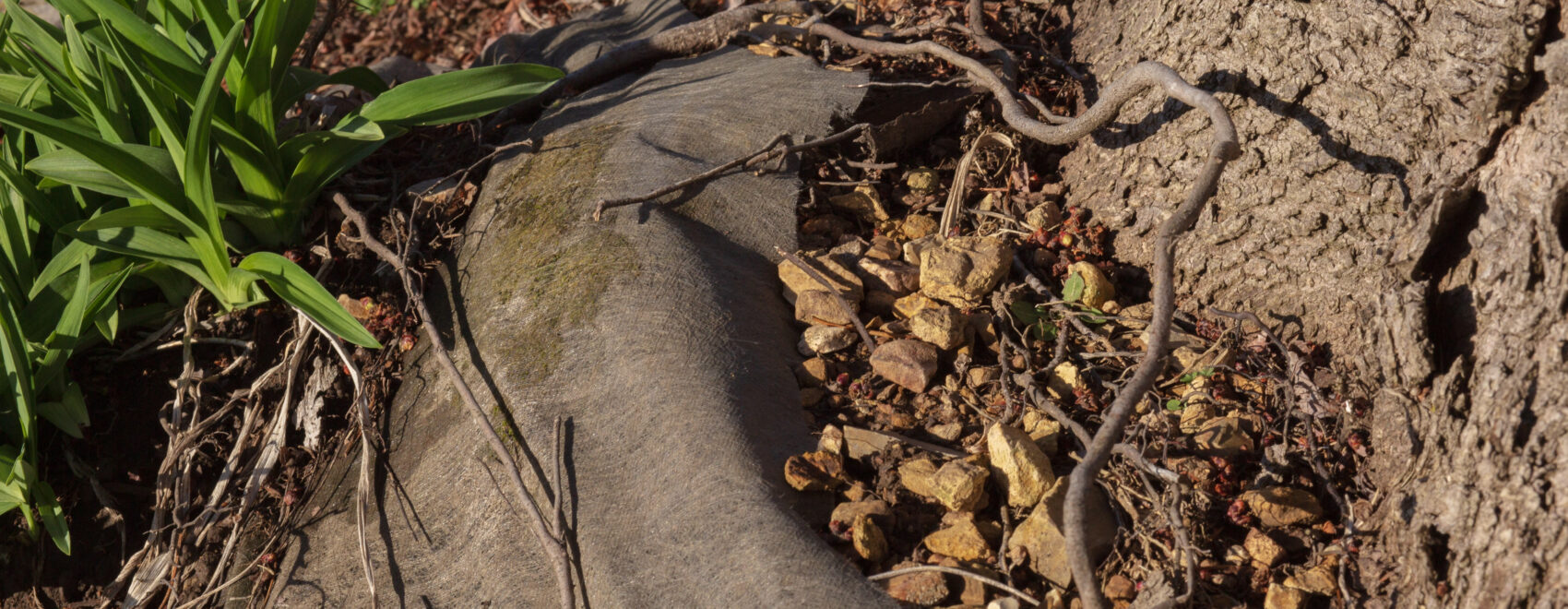
If you’ve ever tackled a landscaping project or visited a garden center, you’ve probably seen rolls of landscape fabric marketed as a simple solution for weeds and low-maintenance garden beds.
The idea sounds appealing: lay down a barrier, cover it with mulch or rocks, and enjoy a weed-free landscape.
But the reality is a bit more complicated than that.
Landscape fabric certainly has its place in some projects, but it’s often misunderstood and misused, especially in planting beds.
To separate fact from fiction, Pollen to Petal Landscape Designer Sa’dia Luallen-Blattert tells us about the benefits, myths and common mistakes she’s seen in her work with homeowners in Southwest Missouri.
The more you know, the easier it is to design a healthy landscape centered on native plants and sustainable practices.
What Is Landscape Fabric?
Landscape fabric—sometimes called weed fabric—is a sheet-like geotextile material that comes in rolls. It is laid over the soil before adding gravel, rock mulch, or other materials.
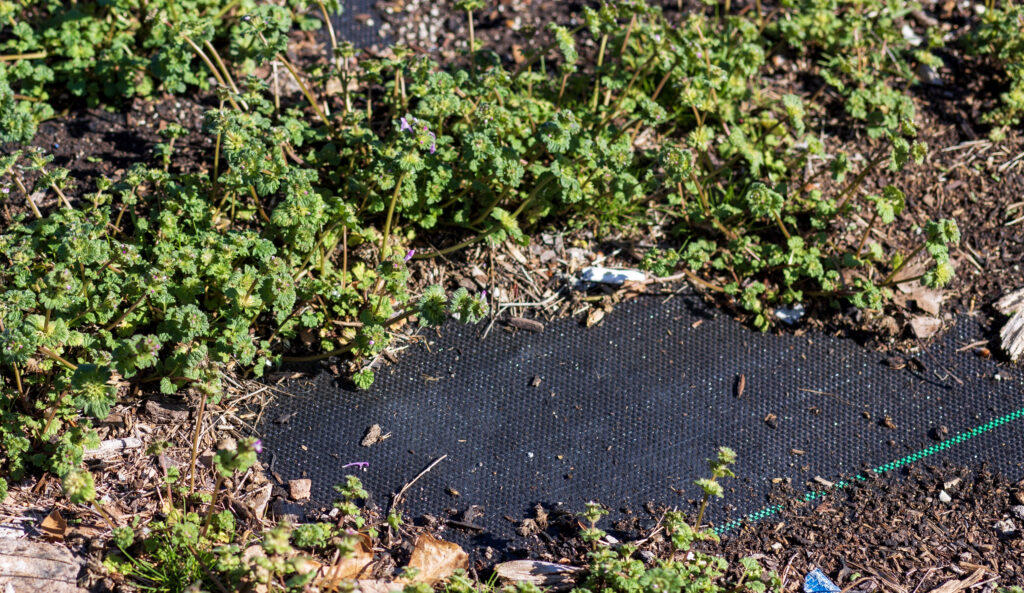
According to Luallen-Blattert, the product was originally designed for infrastructure and construction projects, not necessarily for garden beds.
“Landscape fabric is used in construction, drainage management, and landscaping,” she explains. “It’s commonly used in large-scale projects like road construction, parking lots, pads, and driveway stabilization where it separates soil from other materials like gravel.”
There are several types of landscape fabric, including woven and non-woven fabric. These fabrics are typically made from materials such as:
- Polypropylene
- Polyester
- Linen (less common)
Manufacturers often promote landscape fabric as a way to suppress weeds, regulate soil temperature, and allow air and water to move through the soil. However, those claims don’t always reflect what actually happens in real landscapes over time.
When Landscape Fabric Makes Sense
Despite the debate around landscape fabric, there are situations where it plays an important role.
“Landscape fabric is required for the installation and long-term success of certain infrastructure projects,” says Luallen-Blattert. “For example, it’s essential under gravel driveways or pathways because it prevents the stone from sinking and mixing with the soil.”
Common appropriate uses include:
- Gravel driveways
- High-traffic paths
- Areas with rock mulch or pea gravel
- Construction and drainage projects
In these cases, the fabric acts as a separator layer, helping to stabilize the material above it. But when used in planting beds, the results can be very different.
Myth #1: Landscape Fabric Eliminates Weeds
One of the most popular misconceptions about landscape fabric is that it gets rid of weeds forever.

Reality check: It doesn’t.
“A lot of people assume landscape fabric will eliminate weeds,” says Luallen-Blattert. “But manufacturers usually only claim it suppresses them.”
While the fabric can block some weeds from sprouting below the surface, weeds often appear anyway—just in different ways. Over time, you’ll probably notice:
- Leaves and debris collecting on top of the fabric.
- Organic material from mulch breaking down.
- Wind-blown seeds landing in the new organic layer.
This creates the perfect environment for weeds to grow above the fabric. Some plants can even puncture the fabric. “Strong tap-rooted plants like dandelions can break through the fabric and establish anyway,” Luallen-Blattert explains.
Myth #2: Landscape Fabric Improves Soil Health
Healthy soil requires a constant exchange of organic material, air, and moisture between the soil and the environment above it.
Landscape fabric interrupts that process.
“Fabric creates a physical barrier between the soil below and the conditions above,” Luallen-Blattert says. “It restricts organic materials from integrating into the soil profile, which reduces overall soil health.”
Over time this can lead to:
- Reduced microbial activity
- Fewer earthworms
- Less organic matter entering the soil
These factors can hinder plant growth and long-term landscape health.
Myth #3: Landscape Fabric Helps Plants Grow Better
Another common claim is that landscape fabric helps plants thrive by retaining moisture and allowing air exchange.
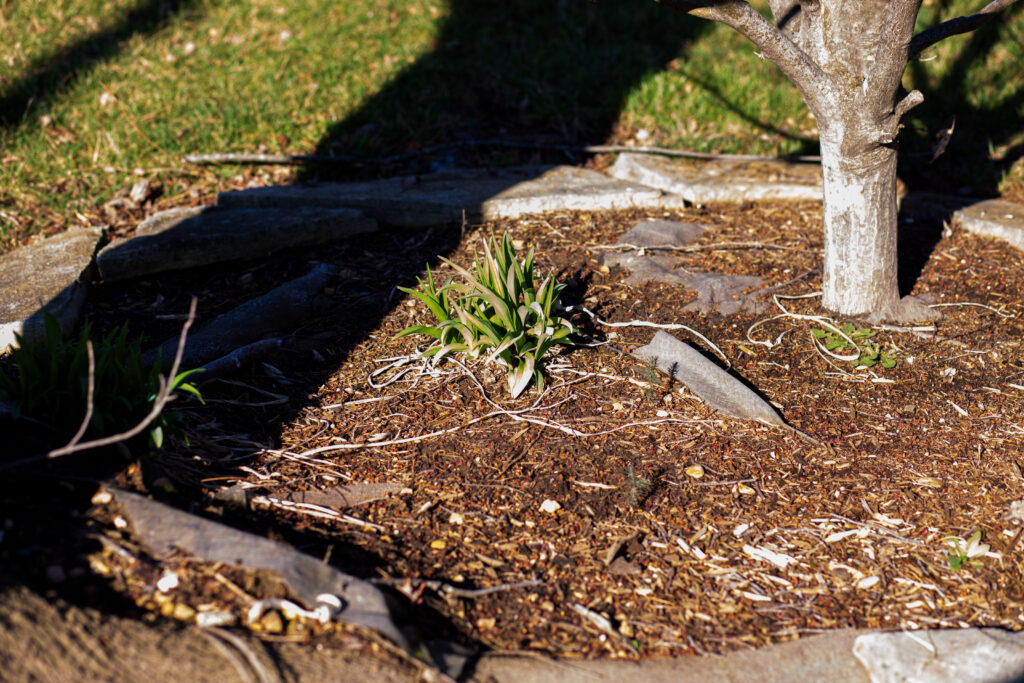
In practice, Luallen-Blattert often sees the opposite. Although fabric is technically permeable, it can significantly slow the rate at which water moves into the soil.
“Water infiltration rates are greatly reduced compared to soil covered with mulch alone,” she says. “That can result in more runoff and less water reaching plant roots.”
Landscape fabric can also create problems when installing plants. Because holes must be cut in the fabric for each plant, the opening often ends up too small as the plant grows.
“Cutouts are rarely large enough for a plant at its mature size,” Luallen-Blattert explains. “That can lead to girdling or strangulation at the base, which often leads to the death of the plant.”
Common Mistakes with Landscape Fabric
In addition to misunderstandings about what landscape fabric can do, several common installation mistakes make problems worse.
Some of the most frequent issues include:
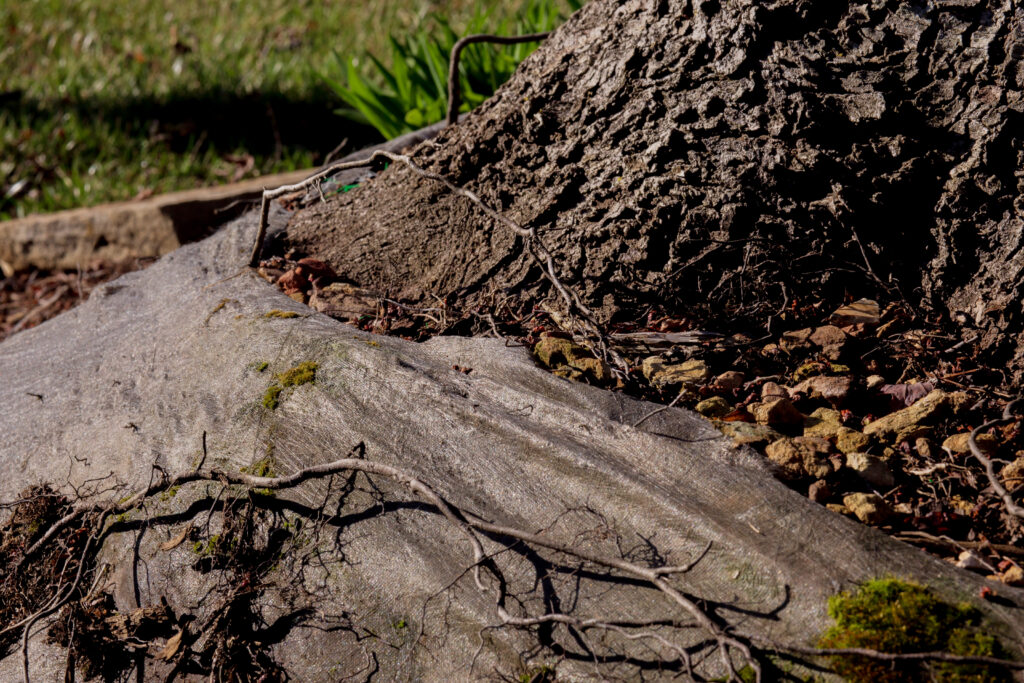
- Not reapplying mulch: Always refresh your mulch periodically! Without this important step, the fabric becomes visible and unattractive. “Failing to reapply mulch every year or two leaves bare spots where the fabric becomes an eyesore,” Luallen-Blattert says.
- Installing fabric in planting beds: Landscape fabric makes planting more difficult. It can also restrict root growth, making it harder for plants to thrive.
- Leaving old fabric in place: When homeowners decide to remove fabric later, it can be time-consuming and labor-intensive. At Pollen to Petal, existing fabric often has to be cut out before new plants can be installed.
A Healthier Alternative: 100% Organic Wood Mulch
For most garden beds, Luallen-Blattert recommends a much simpler solution:
“One hundred percent organic wood mulch does the jobs that landscape fabric manufacturers claim,” she says. “It suppresses weeds, retains moisture, and helps prevent erosion.”
Unlike synthetic fabrics, organic mulch improves soil over time. Benefits include:
- Adds organic matter as it decomposes
- Improves soil structure
- Supports beneficial microbes
- Encourages earthworms and healthy soil life
- Avoids introducing microplastics into the environment
Organic mulch is also easier to maintain. Instead of cutting holes through fabric or removing layers of synthetic material, all you have to do is replenish the mulch as it breaks down.
In addition to wood mulch, other organic materials can work well for weed suppression and soil health.
- Seed-free straw
- Shredded leaves
- Pine needles
- Arborist wood chips
However, Luallen-Blattert notes that truly seed-free straw can be difficult to find.
Choosing the Best Mulch for Your Yard
Landscape fabric isn’t inherently bad. It’s simply designed for a different purpose than many homeowners realize.
Although it performs well in infrastructure projects like gravel driveways or pathways, it often creates more problems than it solves in planting beds.
“Organic mulch supports healthier soil and healthier plants,” says Luallen-Blattert. “In most garden beds, that’s the better long-term approach.”
If you’re planning a landscape project and aren’t sure which materials are best for your yard, Pollen to Petal can help design a landscape that supports healthy soil, native plants, and long-term sustainability.