By Drew Blattert
When that first cold snap hits the Ozarks, our first instinct is often to grab the rake.
For pollinators, though, that tidy, leafless yard can be a disaster. That’s because many of the insects we depend on aren’t gone for the winter. They’re right there, tucked into leaf litter, hollow stems, and soil until spring.
Sa’dia Luallen-Blattert, Grow Native! Certified Professional and landscape expert at Pollen to Petal, says you can have the best of both worlds:
A well-maintained winter yard that looks good and supports our local ecosystem.
The key is knowing when to do less of some things and a little more of others.
Keep reading to learn why winterization is important and five simple ways to maintain a beautiful, eco-friendly lawn this winter.
Your Yard Is a Winter Nursery
According to the Xerxes Society, there are more than 20,000 species of bees in the world, and more than 90% of them live solitary lives.
That means most bees don’t have a cozy hive to retreat to.
To survive the winter, they build small “apartments” in the ground, as well as in the crevices and stems of dead plants. Butterflies, moths, and fireflies must also overwinter in the leaf litter beneath your plants.
When we remove all of the leaves and dead plants in the fall, we remove the habitat these insects rely on. The good news is that it’s easy to maintain a neat and eco-friendly lawn as you prepare for the winter.
Pollen to Petal’s Five-Step Winterization Checklist
- Leave leaves where they fall in beds, or move them gently to a designated spot.
- Keep hollow stems standing at 8 to 24 inches instead of cutting to the ground.
- Leave seed heads for goldfinches and other songbirds.
- Refresh mulch in fall or early winter.
- Water evergreens deeply during winter dry spells.
#1: Leave the Leaves
Think of fallen leaves as free insulation for your lawn.

That’s because pollinators such as fireflies need leaf litter left in place to have a safe overwintering location.
“By ‘leaving the leaves,’ you can easily create habitat that increases biodiversity and builds your soil profile simultaneously,” Sa’dia explains.
Worried about what the neighbors or your HOA will think of a leaf-covered lawn? You don’t have to sacrifice curb appeal for sustainability:
- Pick one spot: Sa’dia says she leaves fallen leaves under one tree in her back yard.
- Move leaves into your beds: Rake the leaves off the front lawn and fill raised garden beds with them. You get a tidier lawn and free mulch.
- Use the hidden corners: Behind a shed or outbuilding is an inconspicuous place for leaf habitat.
The MU Extension notes that it’s fine to have 10 to 20 percent of your lawn covered with a thin layer of leaves. They will nourish your soil as they decompose, supporting the year-round health of your lawn.
To make the most of this valuable resource, rake leaves gently. Avoid shredding, as this can destroy hibernating insects. Always keep leaves away from direct contact with tree trunks.
#2: Keep the Stems Standing
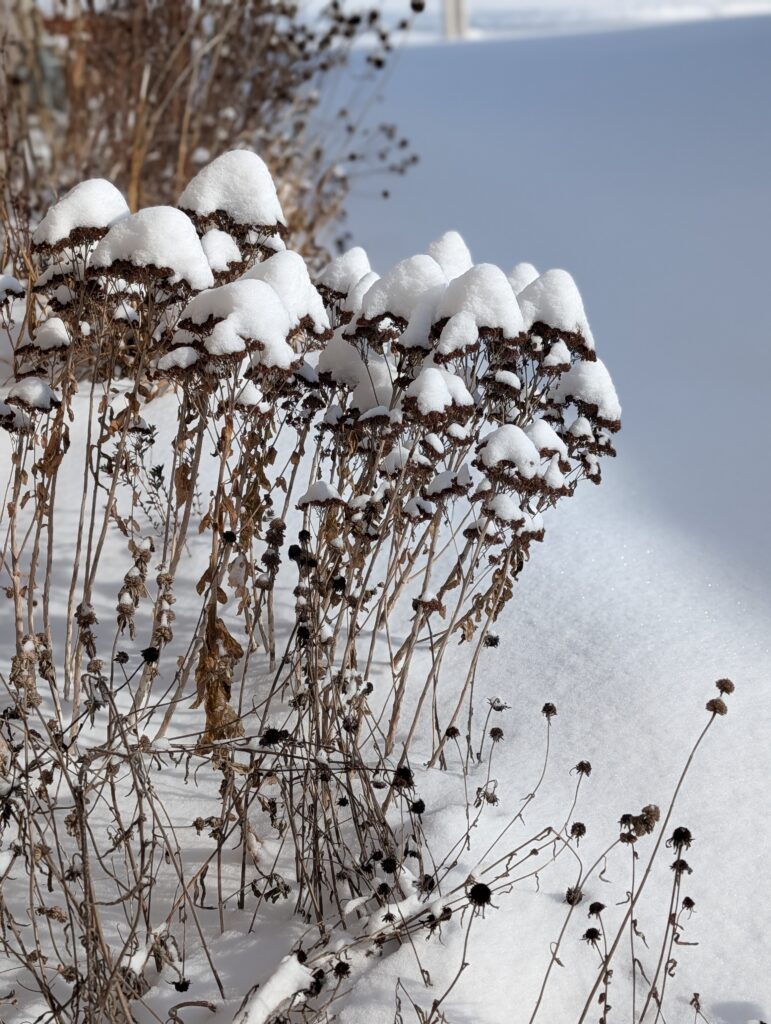
Many native bees nest in hollow plant stems, and other beneficial insects are still developing inside them well into winter.
“Fully cutting back stems in the landscape denies viable nesting sites and reduces your pollinator population,” Sa’dia cautions.
Instead of cutting stems to the ground, leave them standing between 8 and 24 inches. This height range exposes the cavity, giving pollinators plenty of space to lay several chambers of offspring. If you must neaten things up a bit, cut the stems at varying heights rather than all at one level.
Small piles of trimmings tucked behind evergreen shrubs or a shed also work well as habitat. Just keep them off the foundation of your home, and never compost diseased plant material. Bag it and throw it in the trash.
#3: Let Seed Heads Feed the Birds
A pollinator-friendly yard supports more than insects. Seed heads of native perennials are a winter lifeline for local songbirds.
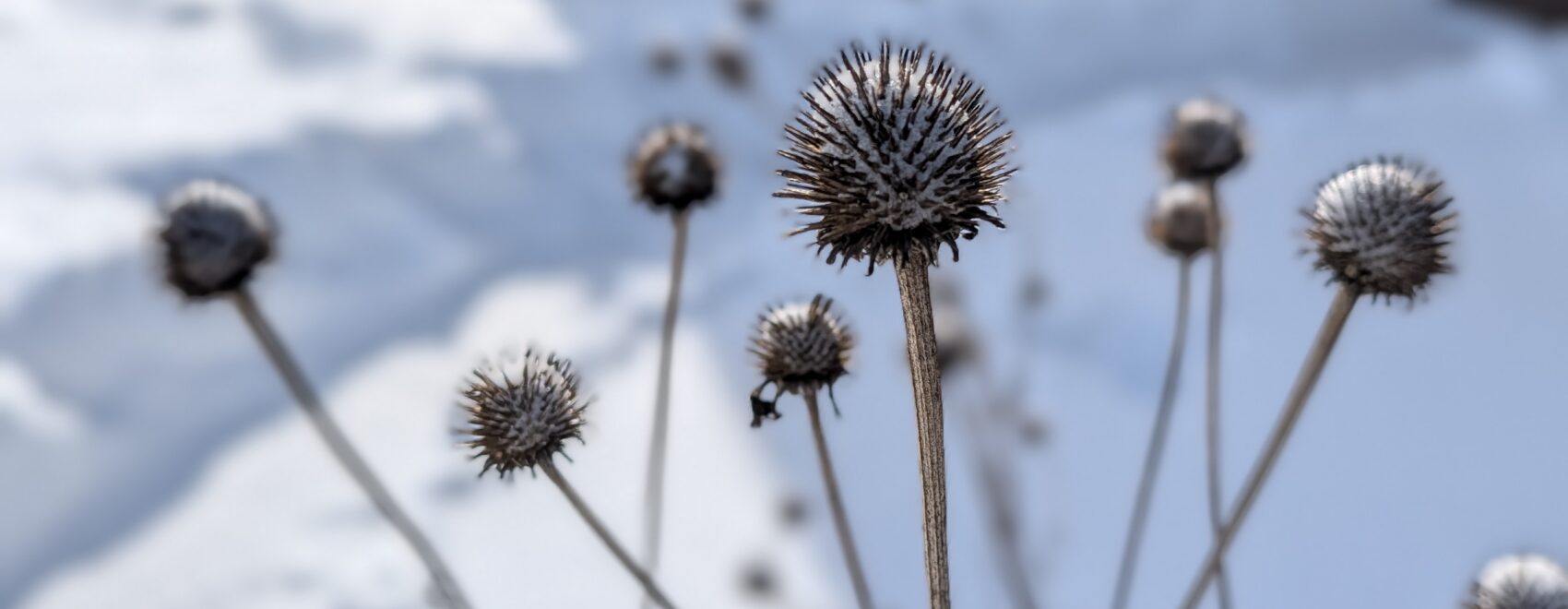
According to Sa’dia, “seedheads like Echinacea and Rudbeckia support songbird populations during winter when other food sources become scarce. Goldfinches have a particular affinity for Echinacea seeds!”
Want to attract more birds to your lawn this winter? Skip the pruners on your purple coneflower and black-eyed Susans to create visual interest and offer a healthy meal to our feathered friends.
#4: Refresh Your Mulch
If you haven’t refreshed your mulch in a while, fall or early winter is a great time to catch up.
Sa’dia points out that a fresh layer insulates root systems and protects plant crowns from freezing. It also blocks sunlight, which suppresses seeds that would otherwise germinate in spring. You can find excellent tips on applying mulch around trees in our Sowing Ideas blog.
#5: Don’t Forget Your Evergreens
Evergreen trees and shrubs provide important habitat for birds and insects, but they’re easy to overlook in winter. Because they never fully go dormant, they can lose moisture quickly in dry winter winds.
Sa’dia offers a friendly reminder to give your evergreens a deep watering on mild fall and winter days during a dry spell.
That generous drink of water during a wintertime drought can make or break the performance and longevity of your evergreen plants.
Avoid Common Winterizing Mistakes
English botanist Albert Howard developed what became known as the Law of Return, based on his extensive studies of organic farming practices in India.
The law says that what is taken from the soil must be returned, and it became central to the early organic farming movement.
“I consistently see property owners violating this law and then asking why their plant materials are not thriving,” Sa’dia notes. “We have to remember that for the soil to feed and maintain plants, we must first allow the natural decomposition cycle to feed the soil.”
In practice, that means we shouldn’t bag up and haul away everything the yard produces. Here’s what to do instead:
- Mulch grass clippings rather than bagging and removing them.
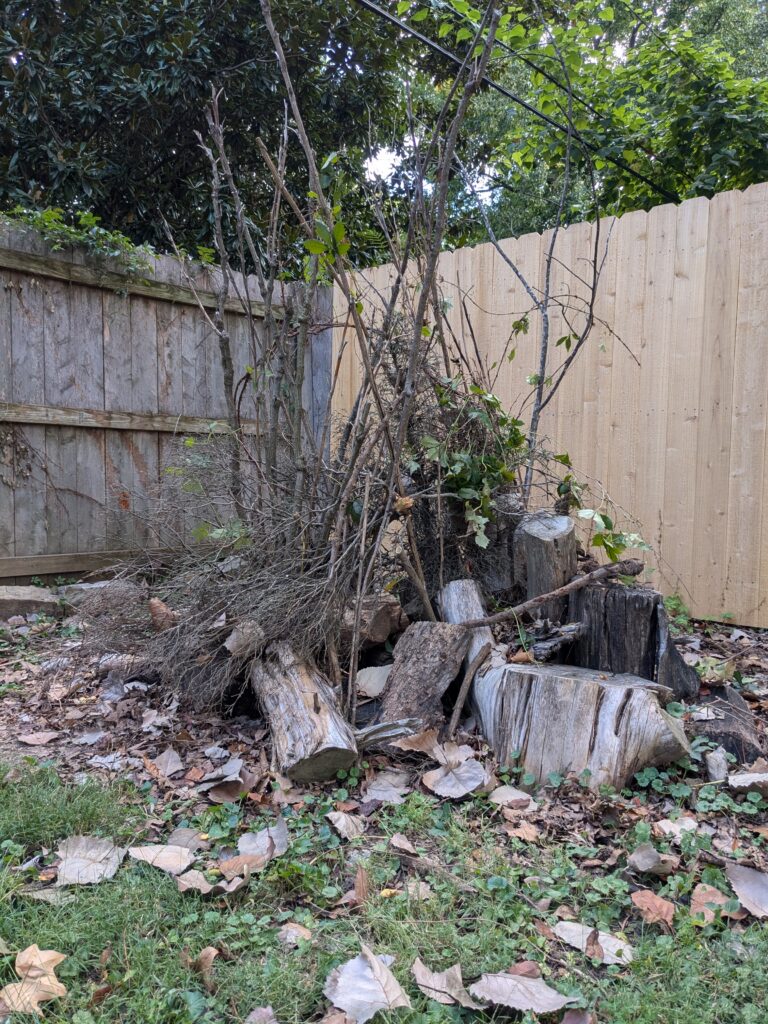
- Curate a deadwood habitat so wood can decay on site, giving mushrooms a place to grow and insects a place to hide. Brush piles and stumps shelter many overwintering creatures.
- Build a pollinator-friendly pile. Stack broken pots, birdbaths, teacups and mugs in interesting shapes and stuff them with dried leaves, soil and pinecones. Angle the pieces so they shed water instead of holding puddles.
The natural circle of life and decomposition will feed the soil. You’ll also save time, money, and the negative environmental impacts that applying fertilizer can create.
Ready to Build a Pollinator-Friendly Landscape?
A healthy yard that works for pollinators year-round starts with the right plants and the right design.
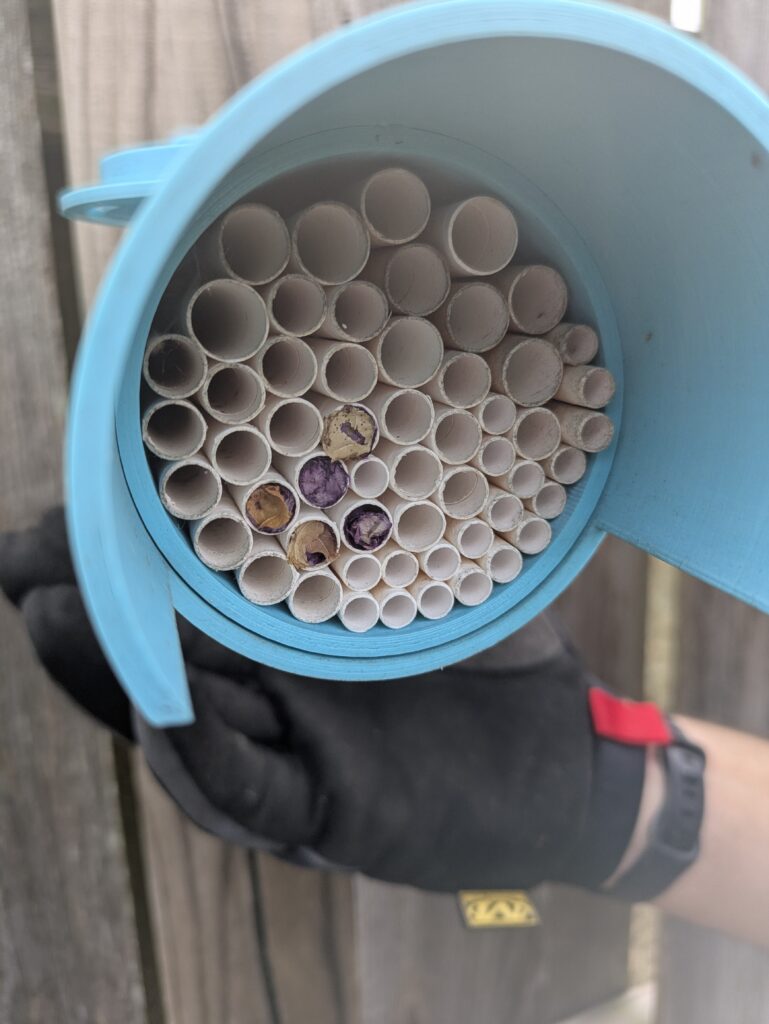
Pollen to Petal creates native landscapes for Springfield-area homes, including Pollinator Pods designed for urban and suburban gardens to increase native pollinator activity.
Contact us today to bring your native landscape to life!